Things You Didnt Know About Animals
1 / lx
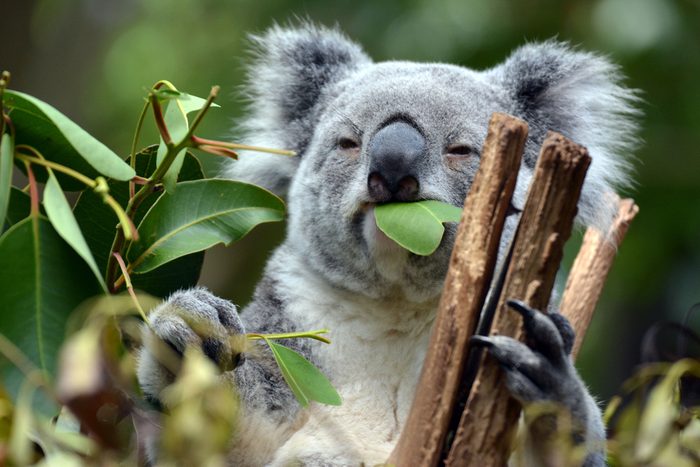
Koalas
These boring-moving, eucalyptus-eating marsupials native to Australia are honey for their sweet demeanors and distinctly not-homo adorableness. All the same, they do share ane feature in common with human sapiens: fingerprints. What's more, their fingerprints, analyzed under a microscope, are well-nigh indistinguishable in the manner they loop and whorl from our own. Researchers posit that koalas adjusted this feature—which is also present in primates such every bit chimpanzees—in order to ameliorate grasp the branches they climb to forage for leaves. Check out these other fun facts almost animals that live long.
2 / threescore
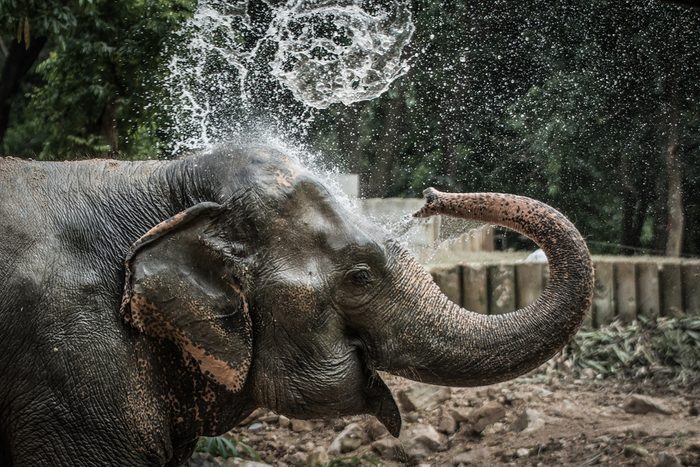
Elephants
According to Alive Science, elephants take "many admirable qualities," including a fantastic sense of smell, a seeming virtually-immunity to cancer, and "complex social lives." Despite all this, hither's a crazy animal fact: elephants are unable to jump. That's because they have what an evolutionary researcher at the Royal Veterinary College in London calls "wimpy lower-leg muscles" and inflexible ankles—conditions that besides make information technology a challenge for them to run for more than a brusk altitude. These manatee facts will blow your listen.
3 / 60
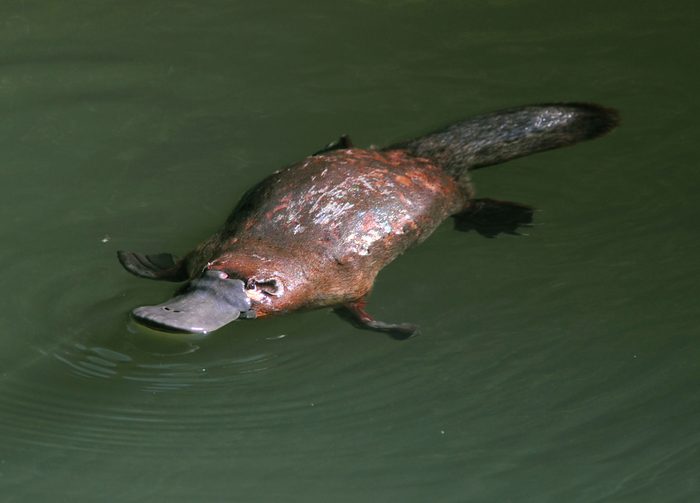
Platypuses
As silly as platypuses look, yous certainly wouldn't want to get on the bad side of ane. Ane of the fun facts about animals that look innocent, like the platypus, are their foreign defense mechanisms. The heels of their back anxiety accept spurs that can release venom, making these wild animals one of the few types of poisonous mammals. While the venom isn't strong enough to impale a human, it's extremely painful and tin crusade swelling and even hyperventilation, and that's definitely enough to make platypuses one of the innocent-looking animals that are actually dangerous.
4 / 60
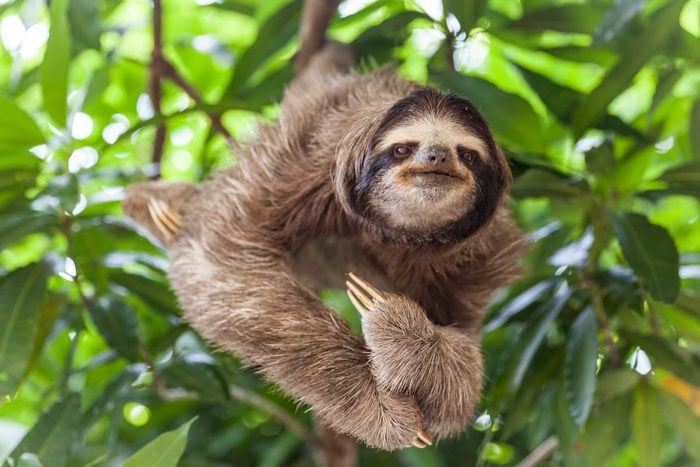
Sloths
You probably call back of sloths as ane of the slowest wild animals out there—and they are pretty slow, to be certain! Simply they actually accept a corking talent that you may not know about. They're skilled swimmers—and they swim about three to four times faster than they usually move! According to Live Science, they exercise the breaststroke but similar humans exercise, and information technology'southward a vital skill for them to survive in rainforests that have a tendency to overflowing. If you idea information technology wasn't possible for sloths to get whatsoever cuter, just imagine one swimming! Or take a look at these adorable sloth pictures you need in your life.
5 / sixty
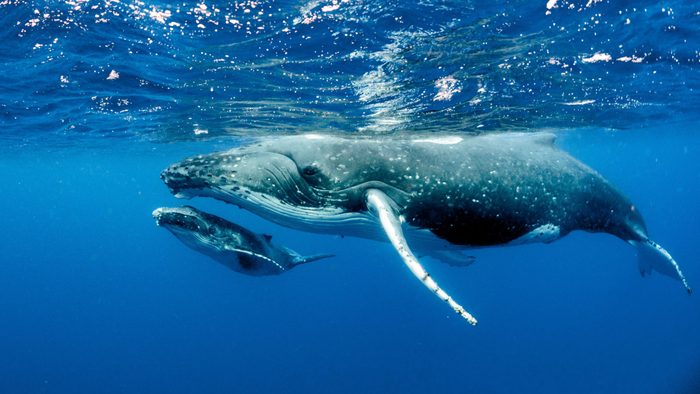
Whales
These massive aquatic mammals cannot actually breathe underwater—they have to periodically return to the surface to breathe. So that raises the question, how practice they sleep?Dothey sleep? Well, they exercise—just only one-half of their brains sleep at a time. Known every bit "unihemispheric deadening-wave sleep," this method allows the whales to go enough rest while also staying alarm plenty to consciously breathe and exist on the lookout for any dangers.
6 / 60
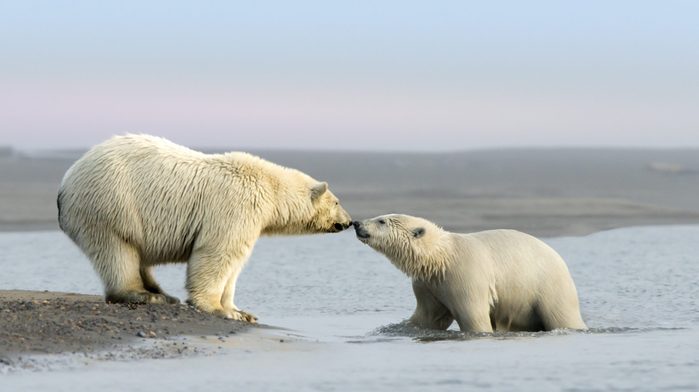
Polar bears
According to Polar Bears International, polar bears employ an ambrosial, unique type of greeting—they touch noses with one another! This is likewise how they request to share food; a conduct volition approach another bear that'due south feeding and touch its olfactory organ to ask permission to bring together in on snack fourth dimension.
seven / 60
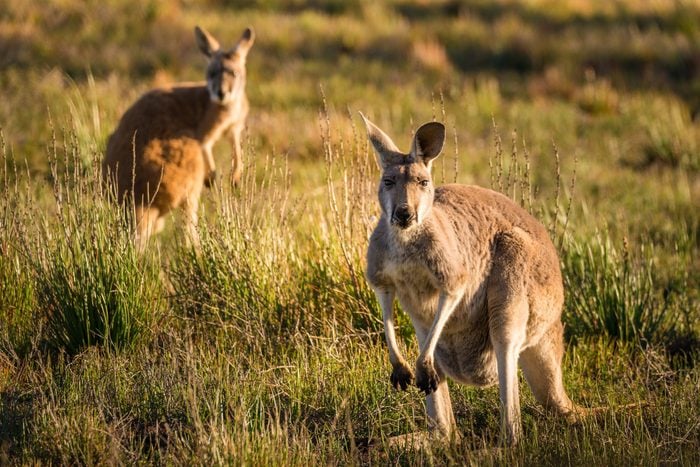
Kangaroos
These large Australian marsupials are known for their ability to hop great distances, which is the principal way they become effectually. Merely an odd feature they take is that they can't walk backward, partly because of the structure of their powerful rear feet and their large tails. This is the reason yous'll find a kangaroo on the Australian Coat of Arms—the designers wanted to symbolize the way the nation was only moving forward, so they picked an animate being that physically tin can't move backward. (The Coat of Arms also has an emu on information technology—emus can't walk backwards either.)
8 / 60
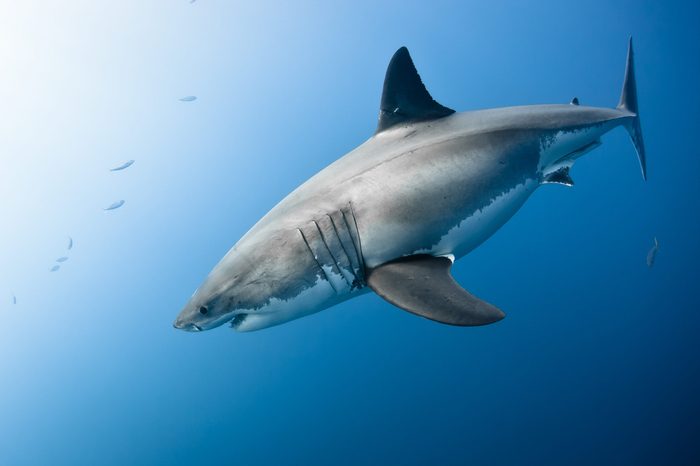
Sharks
"Simply keep swimming…" sings Dory the blue tang inFinding Nemo. For some types of sharks, this is more than just a motivational maxim—information technology'due south life or decease! Alive Science reports that several types of sharks use a sure blazon of animate that requires them to swim apace with their mouths open, which allows oxygen to achieve their gills. While some sharks can breathe even if they're nevertheless, bully white sharks, makos, and whale sharks (among others) must move constantly to accept in oxygen. Check out some more fascinating (and reassuring!) facts well-nigh sharks.
9 / lx
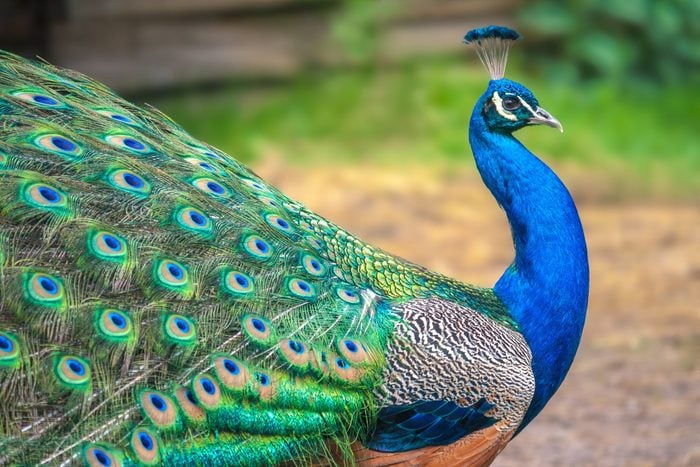
Peacocks
First of all, the idea that "peacock" is the correct name for all of these birds is one of the animal facts that you lot actually take all wrong. "Peacock" only describes the males; the females are technically chosen "peahens," and both sexes are considered "peafowl." Another interesting fact virtually peacocks is that they can exist built-in with partially or completely white coloring due to a genetic mutation; this is known as leucism, and the birds are still stunning to look at!
10 / sixty
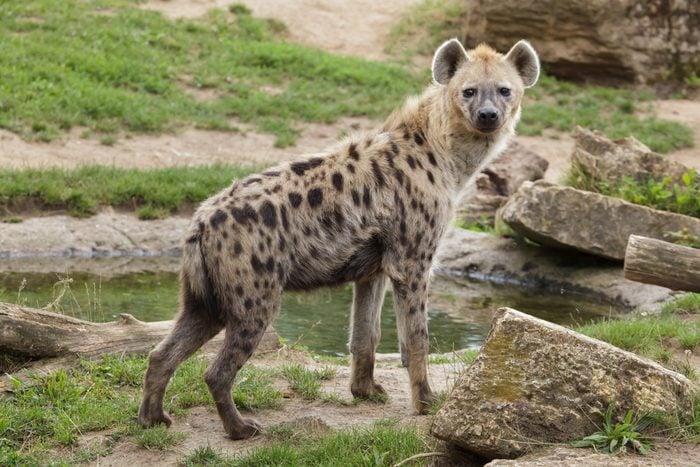
Hyenas
Hyenas are generally thought of and portrayed as dog-like creatures, merely these wild animals are actually more closely related to cats, according to National Geographic! Their scientific classification puts them in the "Feliformia" suborder, one of ii suborders in the order Carnivora. Feliformia is the "cat-like" carnivores; the other suborder, unsurprisingly, is "Caniformia." But hyenas are still unlike enough from big cats to have their own separate family unit classification—entirely their own family unit, "Hyaenidae."
11 / 60
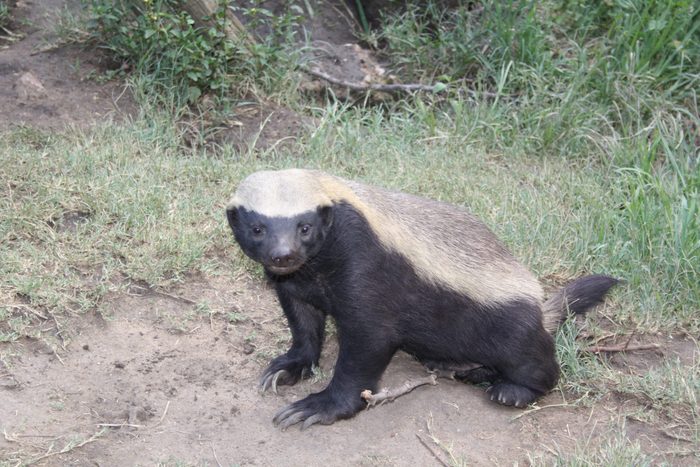
Honey badgers
Though honey badgers accept developed a reputation for being ferocious and simply about indestructible, partly because of their taste for poisonous snakes, they're actually not naturally immune to toxicant. When they're young, their mothers slowly introduce them to poisonous animals similar tiny scorpions so that they develop an immunity. Oh, and their proper name might be something of a misnomer. Though they do expect similar, they're not really closely related to European badgers; they're actually part of the weasel family unit.
12 / lx
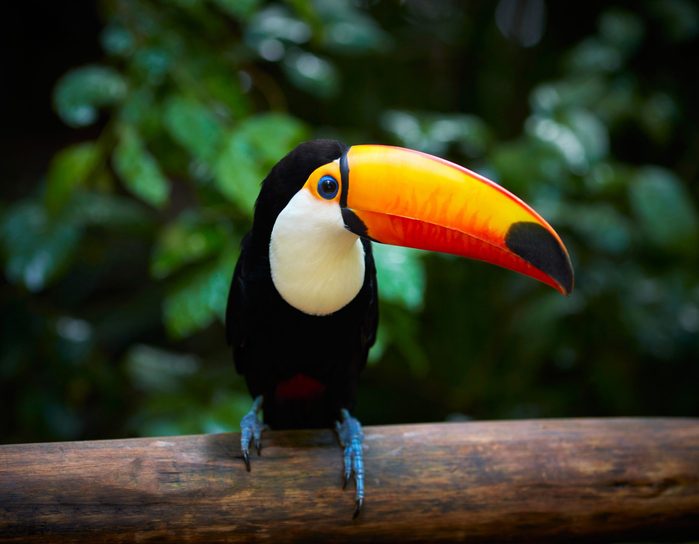
Toucans
If these birds' colorful appearances; uses in marketing; and huge, virtually plush-looking beaks requite you the impression that they're a fun-loving species, well…y'all'd actually be right! According to National Geographic, every bit part of a mating ritual, a pair of toucans will toss fruit back and forth with their beaks! Birds of all species can accept quite the sense of humour, as these 22 hilarious bird photos prove.
13 / sixty
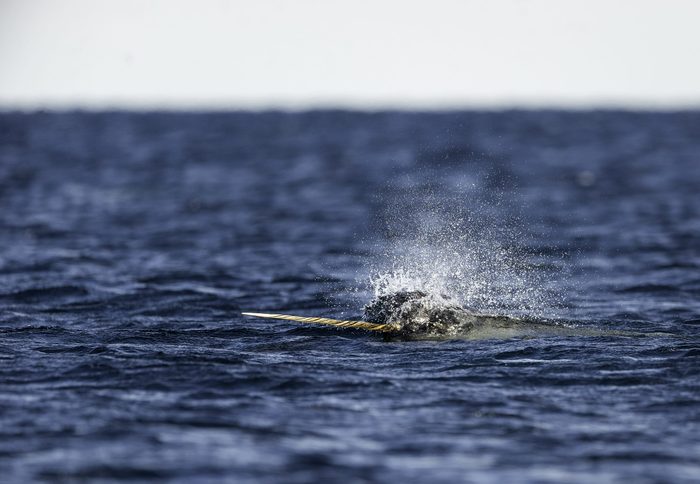
Narwhals
This "sea unicorn" is a double-take-worthy fauna if there ever was one. And learning facts near narwhals doesn't brand them any less bizarre! In fact, go a load of this weird fact: The "horn" or "tusk" that makes them and so famous is really a tooth! It juts right through the male narwhal'southward upper lip and reportedly plays a office in attracting a mate. Expand your knowledge of weird animal facts by learning about the strangest brute found in your state.
14 / threescore
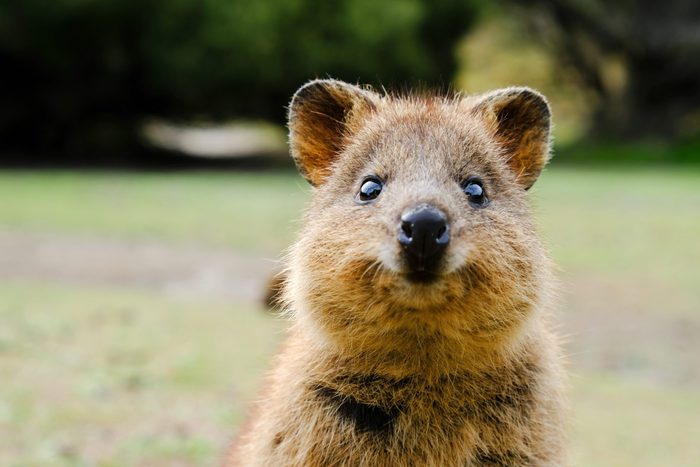
Quokkas
These smiley Australian mammals are all over Instagram, but they're more than a pretty face up! The creatures are native to the western Australian island of Rottnest, a nature preserve where freshwater is scarce. Luckily, though, these lilliputian guys tin can survive for a full month without drinking water, mainly because their diet includes leaves and vegetation that comprise a lot of moisture. Quokkas hands make our list of absolutely ambrosial wild fauna that give puppies a run for their money.
15 / 60
Lemurs
Though at that place are more than than 100 unlike species of lemur, lemurs are considered amongst the well-nigh critically endangered mammals in the globe due to their low overall number. Some of the near notable types of these Republic of madagascar-domicile creatures are the ring-tailed lemurs, whose tails are longer than their bodies, and the blueish-eyed blackness lemur, which, according to the San Diego Zoo, is the simply primate besides humans that can have blue eyes.
16 / sixty
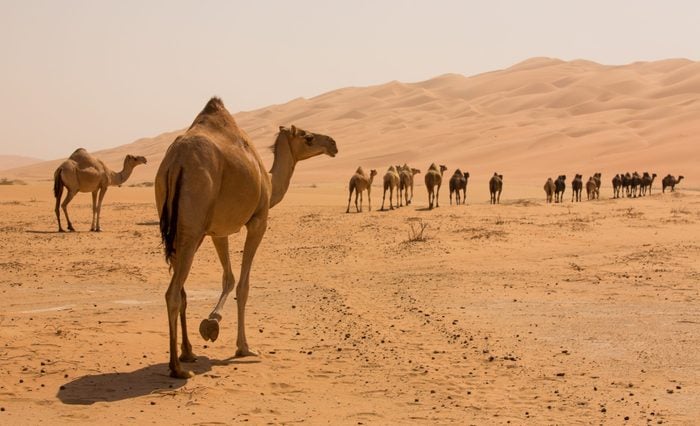
Camels
These gentle giants (well, mostly—yous certainly wouldn't want to be on the wrong end of a boot or spit from one!) take been nicknamed "the ships of the desert." While that'due south partly considering they've carried cargo across the desert throughout much of human history, it's also because of the "rolling" way they walk. The distinctive style they walk is by moving the legs on each side of their body at the same fourth dimension (their two left legs, and then their ii correct legs, and then on), making them "rock" dorsum and forth when they walk.
17 / 60
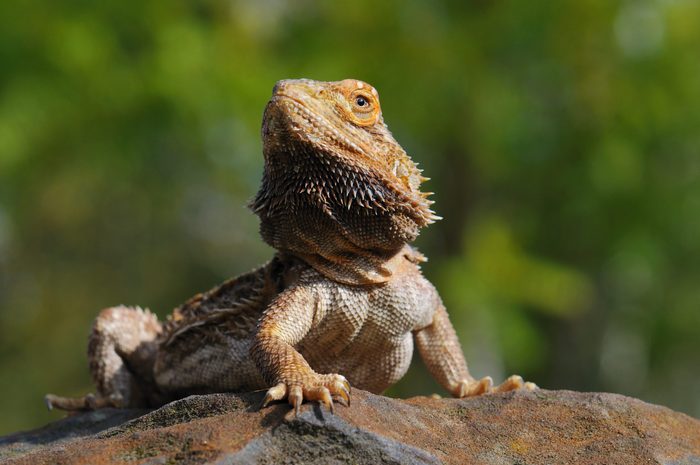
Bearded dragons
With a name like that, y'all'd call up these creatures would exist the epitome of ferocity—and they certainly look pretty intimidating, to be sure. Just, according to PetSmart, they're actually quite friendly, and they accept the adorable quirk of waving their arms in an virtually human-like manner to demonstrate recognition.
xviii / lx
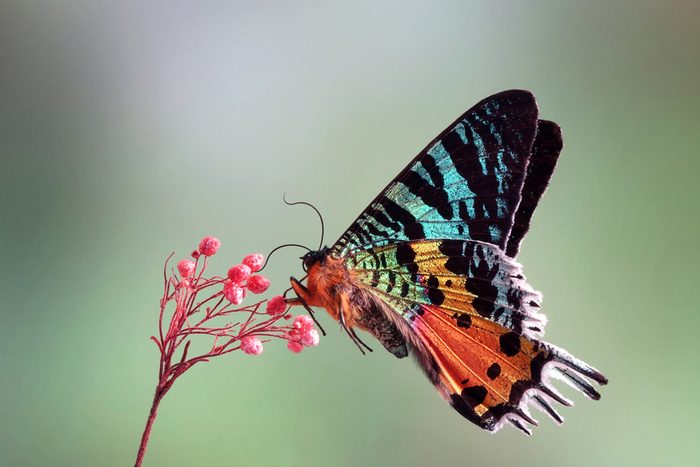
Butterflies
Although butterflies have long, tube-like tongues chosen probosces they unfurl then they can suck in flower nectar, their ability to taste does not come from their mouths. Rather, it lies in their feet. Co-ordinate to the San Diego Zoo, this allows them to discern which flowers they state on are the right ones for laying their eggs on. "[B]y standing on a leaf, they can taste it to come across if their caterpillars tin can swallow it," says the zoo's website. Learn more than fascinating facts almost these beautiful creatures.
xx / 60
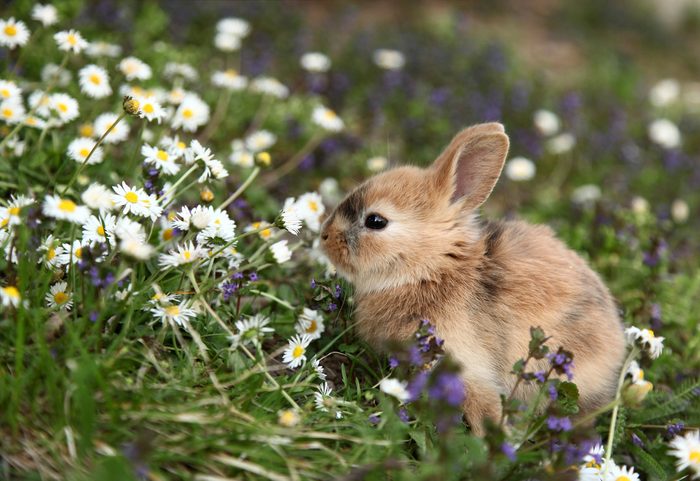
Bunnies
Sure, they've got those long ears, all the amend to hear y'all with—every bit AskNature.com points out, they can rotate these appendages 270 degrees in order to detect sounds, some from every bit far as two miles off, in almost every direction. Only they as well serve some other valuable purpose: they shed heat, allowing rabbits, which can't sweat like humans or pant like dogs, to stay absurd in the summer.
21 / lx
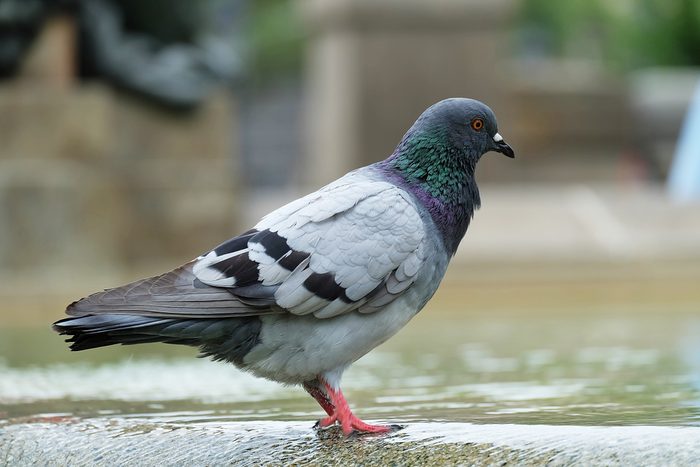
Pigeons
Some people call these common urban residents—also, and more accurately, known as rock doves —"rats with wings." And that'southward giving this incredible, intelligent species brusk shrift. Not only tin can pigeons be trained to deliver letters across great distances, simply researchers at Keio Academy in Tokyo discovered they could also be trained to distinguish between the paintings of Monet, Picasso, Braque, Matisse, Cézanne, and Renoir. Now that's 1 of the top fun facts about animals you probably didn't know!
22 / 60
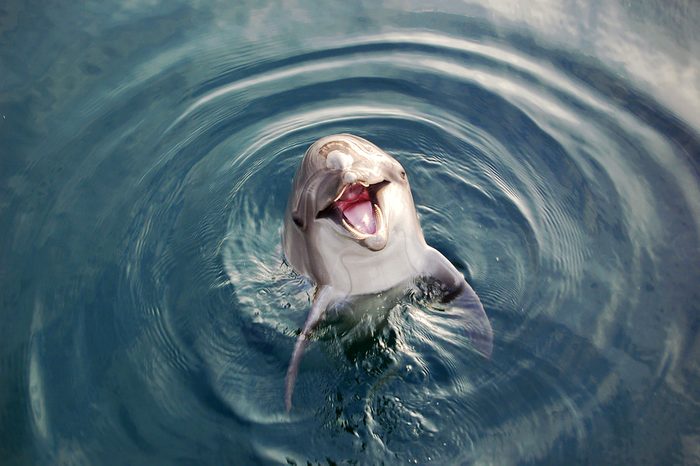
Dolphins
Incredible equally this animal fact may seem, dolphins phone call each other past "name." Research at the University of St. Andrews found that dolphins tin can call out to other dolphins by mimicking the distinct whistle of the dolphin they want.
23 / 60
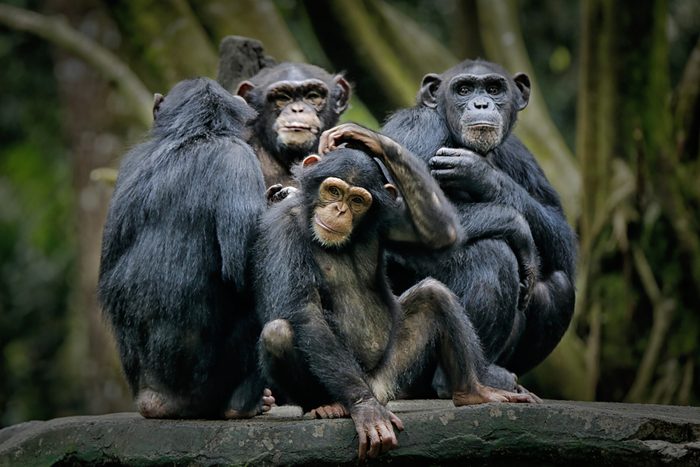
Chimpanzees
Not convinced that men and chimps are closely related? In 2015, the Royal Science Open Society reported that scientists in Guinea had discovered that the animals they were studying frequently drank fermented palm sap—an alcoholic, naturally-occurring sort of wine that human locals are also fractional to. The cool clincher: the chimps as well used utensils to gather and drink this liquor, namely, crushed leaves they used as "sponges" to sop it upwards and move it to their mouths—often in copious plenty quantities that some of them actually got drunk.
24 / 60
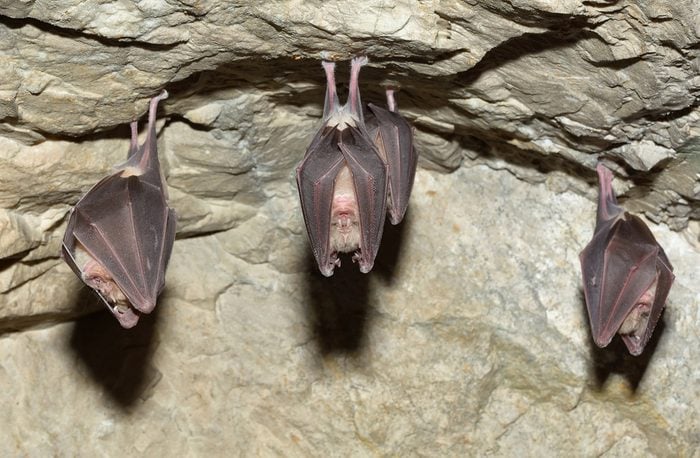
Bats
Like pigeons, bats are another amazing grouping of animals that are unjustifiably reviled by humans. Certain species, like the footling brown bat (Myotis lucifugous)—currently about eradicated across the Northeastern United States due to a fungus called White-nose syndrome—can eat 1,000 mosquitoes an hour (that's one bat per 1,000 mosquitoes!). Perhaps our favorite bat fact of all: they requite birth upside down and take hold of their newborns in their wings.
25 / lx
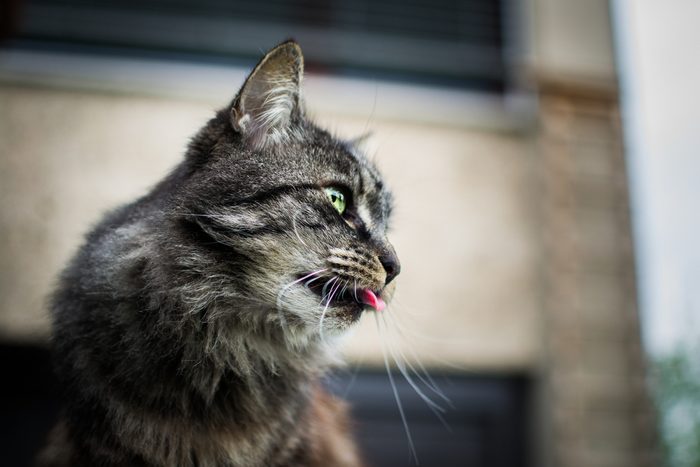
Cats
Fun facts nigh animals similar cats are always fascinating because people really interact with them more often than more obscure species. You may have named your beloved flufferpuss Mr. Band Ding afterward your favorite sugariness treat. Ironically, though, sweet is ane gustation that domestic and some wild cats cannot find. That'southward because they're lacking sweet sensors on their tongues and elsewhere in their mouths, according to scientists at the Monell Chemical Senses Center. In fact, this seems to exist an ability that strictly carnivorous cats lost over time; cats that are omnivores still appear to be able to distinguish a sugary flavor. Don't miss these 17 surprising facts about your kitty.
26 / 60
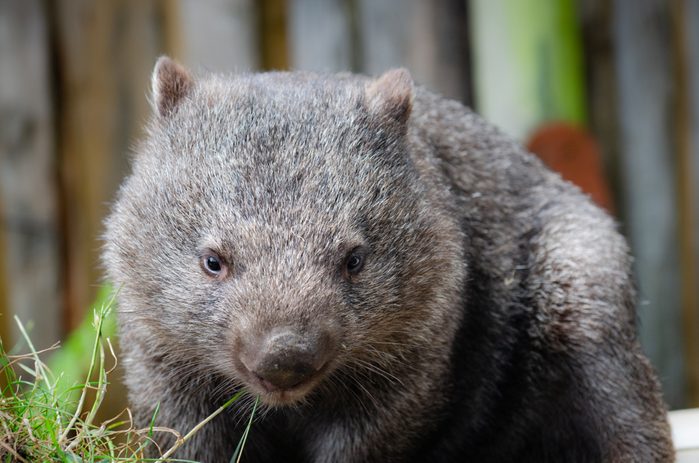
Wombats
There's a factoid that's gotten a lot of attention lately, and no surprise—that wombats poop foursquare poop is truly a weird miracle! The reasons for how and why this is so accept been a mystery for years, but recently a couple of scientists at the Georgia Plant of Engineering science and Australia's University of Adelaide decided to practice a more rigorous analysis. Turns out, wombat poop is extremely dry, since wombats, which live in arid climates, extract all moisture from their food. National Geographic reports that their intestines are also irregularly-shaped and stretchy, helping to sculpt dry scat into its unique cube-similar shape.
27 / 60
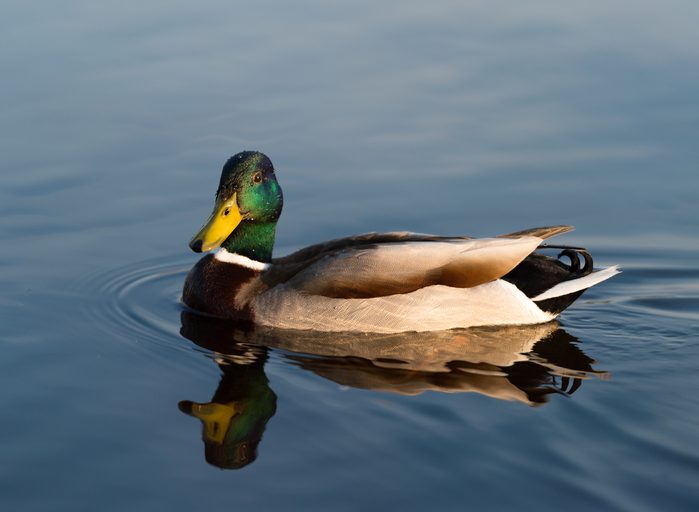
Ducks
California is a hotspot for surfing, for both humans and ducks! Back in 2010, according to a story reported past The Wilson Journal of Ornithology, people started reporting that they'd spotted mallards everywhere from Santa Barbara to San Diego catching some waves, assuasive their feathery bodies to be carried to shore. The reason: nutrient, namely, sand crabs. It's a behavior scientists think they learned from watching native shorebirds such as sand scoters and blackness brants.
28 / threescore
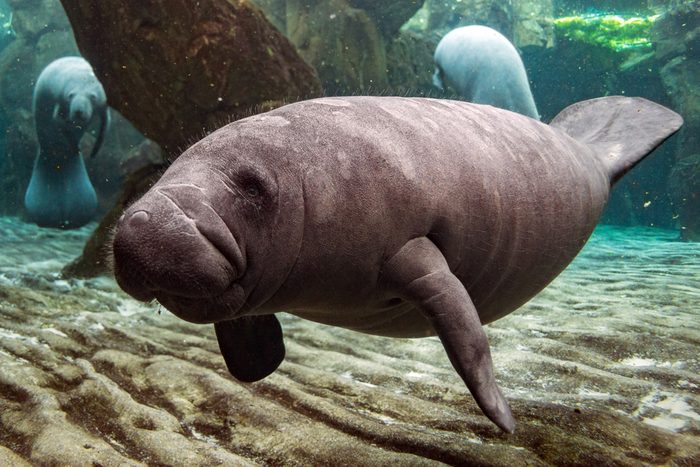
Manatees
Also known equally sea cows, these plump, distant elephant relatives tin weigh as much as ane,000 pounds. They're also vegetarian, which ways that in order to have enough energy to swim around ocean shallows in places such as Florida, they have to eat 10 percent of their body weight every single mean solar day. That's a whole lotta sea salad! Check out our guide to the oddest animals found in each country.
29 / lx
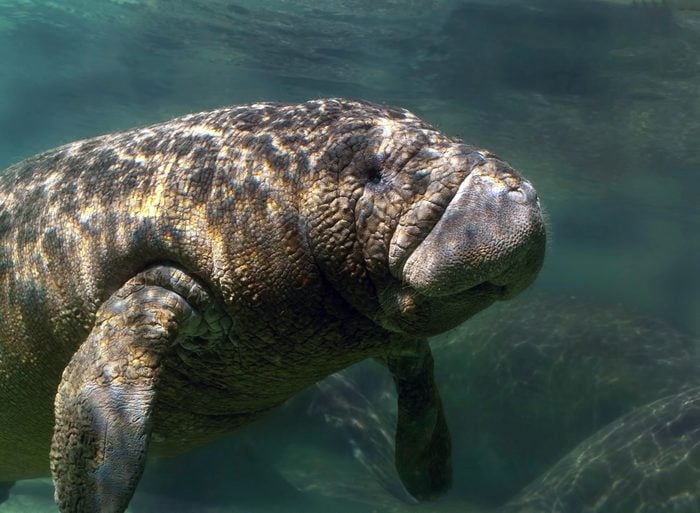
Manatees (part two)
These gentle creatures share water space with some of the fiercest predators out there—namely, alligators. Y'all'd call up that would exist bad news for manatees. Merely scientists study this absurd animal fact: the two species coexist quite nicely. Alligators have been caught catching rides on manatees' backs—although there's speculation that it was the manatee benefitting, from a back scratch. And manatees aren't shy about bumping alligators to get them to motility out of their way, says PBS.
thirty / 60
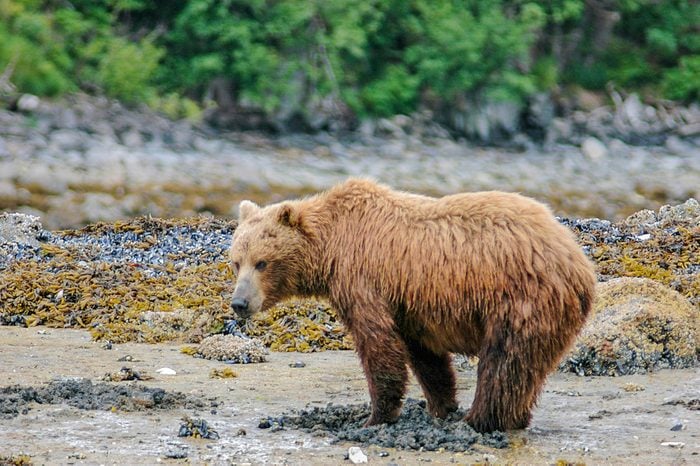
Grizzly bears
You're not seeing things: These powerful (and unfortunately endangered) bears practise indeed have humpbacks. The hump is really a stiff muscle, says BearSmart.com, developed to help grizzlies with their digging—"ripping through the world and tearing apart rotted logs in search of roots, institute bulbs, insects, rodents, and other grubs…[also equally]…powering them as they dig out winter dens."
31 / sixty
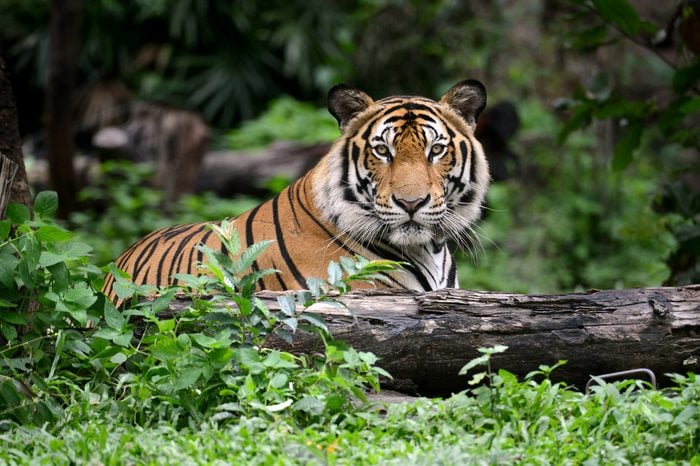
Tigers
Information technology'southward perhaps common brute-fact knowledge by at present that the stripes on every tiger are as individual as fingerprints or snowflakes—no two patterns akin. But did you lot also know that those patterns on a tiger's fur echo on its skin? These patterns, says National Geographic, serve equally camouflage, with the stripes making it hard for prey to see all of its predator at once. It's possible the Sumatran tiger could disappear in your lifetime. Find out 13 other animals are too at risk of becoming extinct.
32 / 60
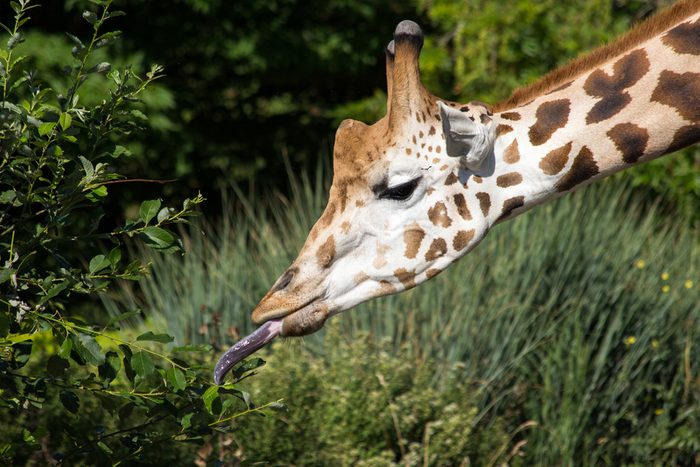
Giraffes
These docile African ruminants, which can grow as tall as 20 feet, have a very unusual feature: Their tongues are a deep purple. Although at that place'due south lots of speculation equally to the whys of the extra-dense melanin of giraffes' mouth organs—and no difficult facts—scientists believe that the dark colour is to protect them from sunburn equally they munch leaves all solar day long out in the strong sun.
33 / 60

Dogs
Did you ever get out your canis familiaris lone for longer than usual, only to come home and swear that she missed you lot more than usual? You probably weren't imagining things. Co-ordinate to Fauna Planet, dogs can tell the deviation between one hour and five hours. They also have an innate sense of when things should happen—like their regularly-scheduled walks and meals. Find out the 19 things your dog actually wants from you.
34 / 60
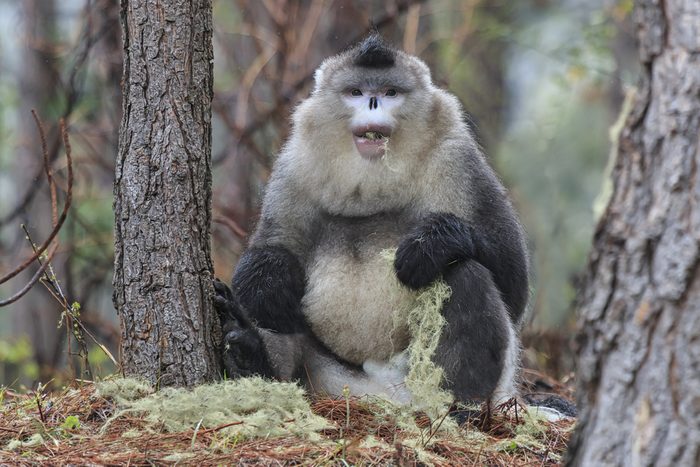
Myanmar snub-nosed monkeys
With all the bad news near brute species going extinct around the world, there'south good reason to celebrate when new species are actually found. One such recently discovered species is the Myanmar snub-nosed monkey, a.grand.a., the sneezing monkey. How did information technology get this name? Its upturned olfactory organ gets h2o in information technology when it rains, which the monkey sneezes out, reports the Guardian. Discover 9 new animal species y'all never knew existed.
35 / 60
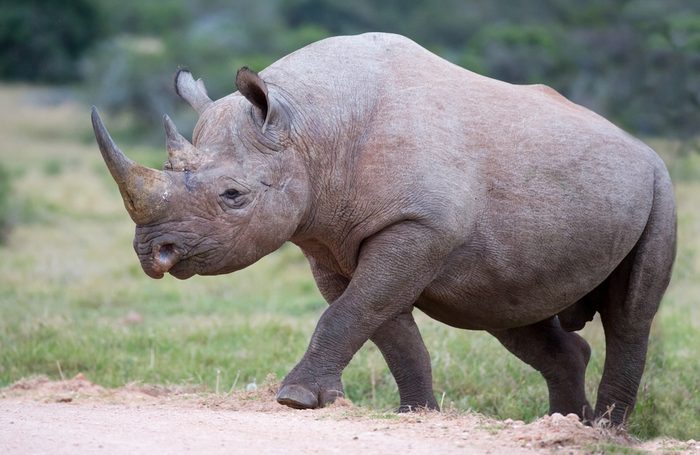
Rhinos
Most creature horns are made of os. Not and then the rhinoceros. Every bit researchers at Ohio University learned in 2006, they're made of keratin, the same stuff that comprises man hair and fingernails. Threading through the core of the keratin and making it super strong are calcium deposits, which are not-existent on the horn's outer, softer surface. Over fourth dimension, that surface gets whittled into its pointy shape by sun exposure and frequent caput-buts betwixt fighting animals.
36 / sixty
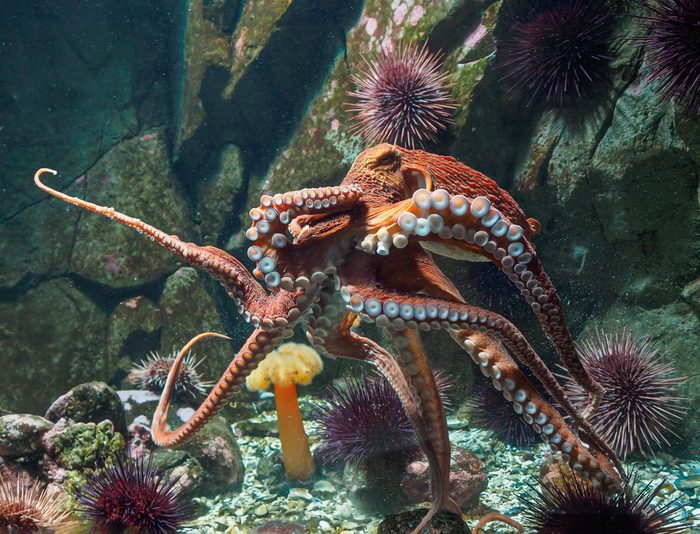
Octopuses
Why would any animal need multiple hearts and brains? We tin can observe out by studying these tentacled dwellers of the deep, which have three hearts—2 to pump claret to its gills and one to pump blood to the remainder of its body. And also an phenomenal nine (!) brains—one that serves as its central command station, and eight others that are actually "big ganglion[s] at the base of each arm which control…movement," explains the Daily Grab. Don't miss these twenty stunning underwater photos.
37 / threescore
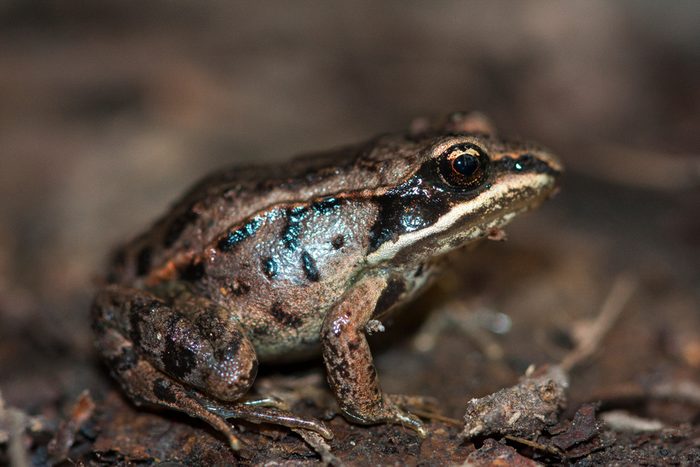
Frogs
Literal freezing is definitely not recommended for humans or other mammals, since it leads to, well, death. Simply for a species of Alaskan wood frog, freezing (mostly) solid, with ii-thirds of their bodies turning to ice, every bit reported past the Los Angeles Times, allows them to withstand vicious winters and alive until the spring. At which point, they thaw and carry on with their existence.
38 / threescore
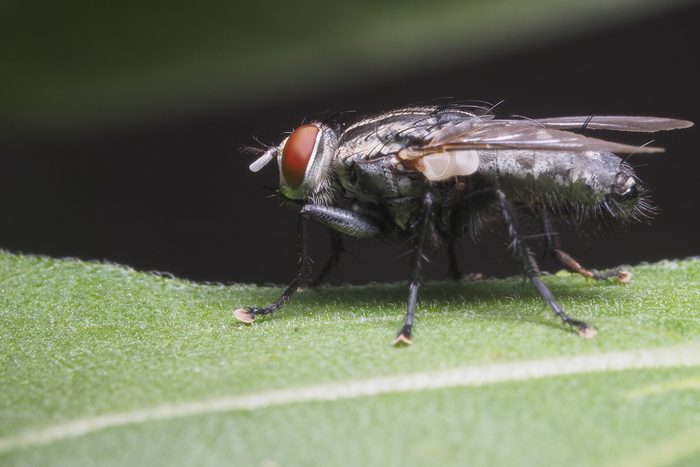
Houseflies
The common household nuisance (Musca domestica) may not have whatever song cords (actually, no insects do). But that doesn't mean it tin't make whatever noise. By flapping its wings 190 times per second information technology makes a sound at a frequency that "the human ear interprets…as a pitch forth the F major calibration." Discover out 13 more than baroque bug facts that volition totally freak y'all out.
39 / 60
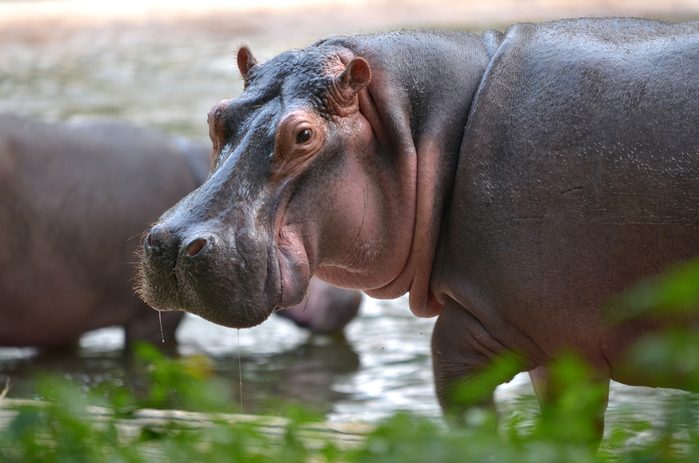
Hippos
Information technology turns out, giraffes aren't the only large natives of the African continent that require protection from the powerful rays of the sun. Hippos exercise, likewise. And they really take their own cooling organisation. Known every bit "blood sweat" (although information technology'southward not actually claret or sweat, according to Scientific American), this oily secretion evaporates as it dries, lowering a hippos temperature. Why the proper name? It appears reddish in the sunlight.
40 / 60
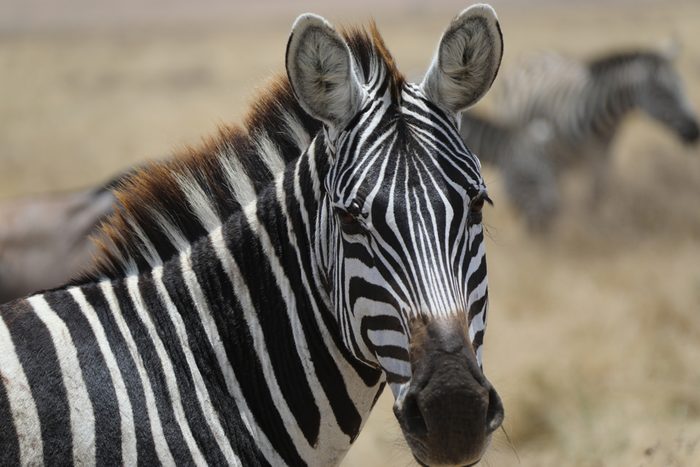
Zebras
Ever wonder why zebras have those vivid blackness and white stripes—since they couldn't possibly serve to brand them inconspicuous out on the Ethiopian grasslands? Oddly, the stripes practise actually make these ungulates harder to see in the tall greenish and xanthous grass. But those black and white zags have another function—they deter nasty bitter horseflies, co-ordinate to inquiry published in the Imperial Society Open Science journal. See if you can spot the camouflaged animals in these 17 photos.
42 / 60
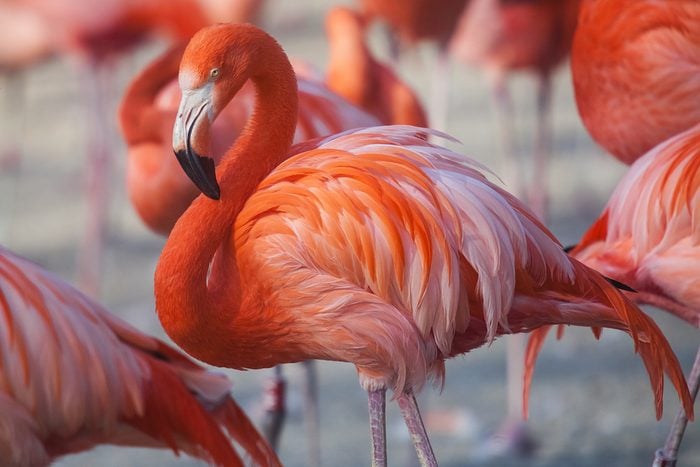
Flamingoes
It'due south a strange but true fauna fact that bears repeating, just because it's and so darn absurd: Famously pink flamingoes aren't pink. They're really born grayness. And they'd stay that way, likewise, if it weren't for their highly specialized diet of shrimp and blue-green algae. According to BBC's Science Focus, these foods contain a natural dye chosen canthaxanthin, which causes flamingo feathers to gradually turn pink over time. Discover the 12 birds you lot can only spot one identify in the globe.
43 / 60
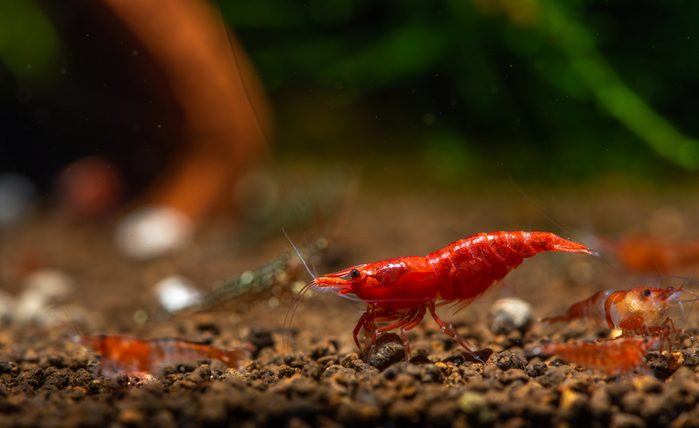
Shrimp
Speaking of shrimp, they are uniquely odd fiddling critters, anatomically speaking. They've got 10 legs instead of a backbone and all of their vital organs—not but encephalon but centre, tum, ovaries, and testacles—are located inside their heads. And although the words "shrimp" and "prawns" are often used interchangeably, scientifically speaking, they're members of different suborders.
44 / sixty
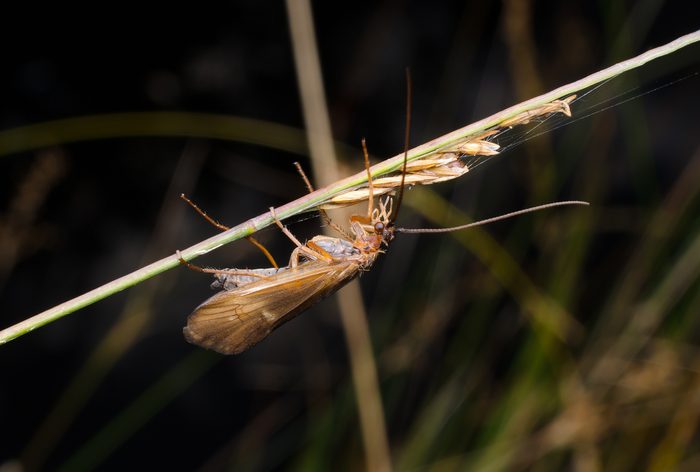
Caddisflies
Able to survive and thrive simply in the cleanest, clearest, fast-moving fresh h2o, caddisflies are mothlike insects that have an enviable ability: They can make their own protective houses. Using the same "silk" they produce to make cocoons as larvae, they stick together tiny bits of river detritus like pebbles, pine needles, and leaves which they fashion into tubelike caves, reports the Hitchcock Middle. They add together on to these portable homes as they grow bigger. These 12 amazing animals are but found in one place in the earth.
45 / threescore
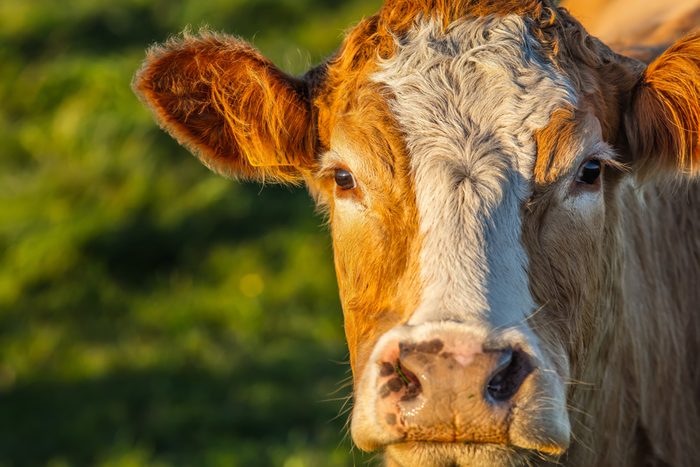
Cows
They moo. They chew grass. They brand milk. And they also…brand friends?!? You lot heard that right. According to an article in Frontier magazine, scientists have discovered that bovines can have besties and just being around them causes them to experience relaxed and free of stress.
46 / threescore
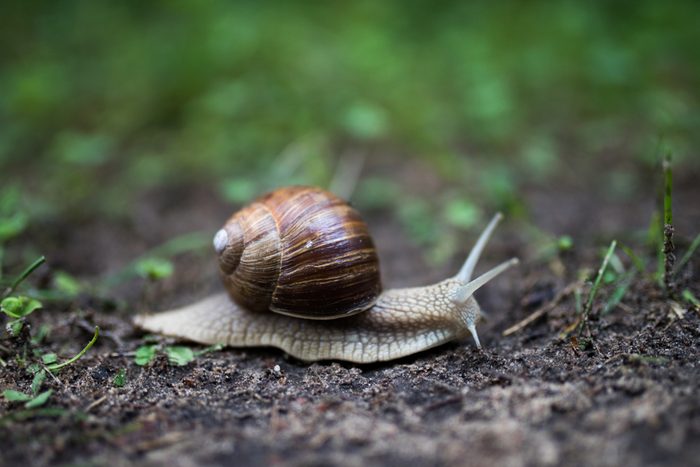
Snails
Living on state or in the water, snails are gastropods that in some cases can grow upward to a pes long (ugh). Notorious for their slime trails, researchers have found these may actually accept some surprising uses, as antioxidants that can also reportedly regenerate human skin and act as all-natural wound-healers. Uses for their slime is one of the grosser fun facts nigh animals.
47 / 60
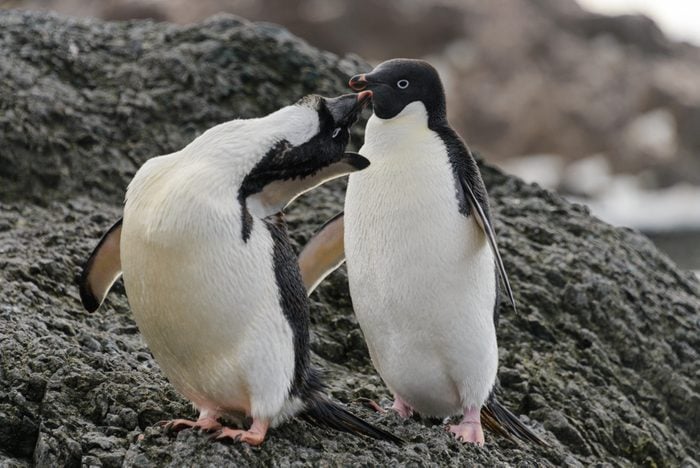
Adélie penguins
Forget about buying the love of your life a diamond ring. If you're a male penguin, what yous're really interested in finding is a pebble to lay at the feet of your dear. This gift has a practical purpose, though. The Adélie species of penguin make their nests out of pebbles and rocks, to keep the eggs inside safety from melting snows. Speaking of, these 15 penguin photos will absolutely melt your centre.
48 / 60
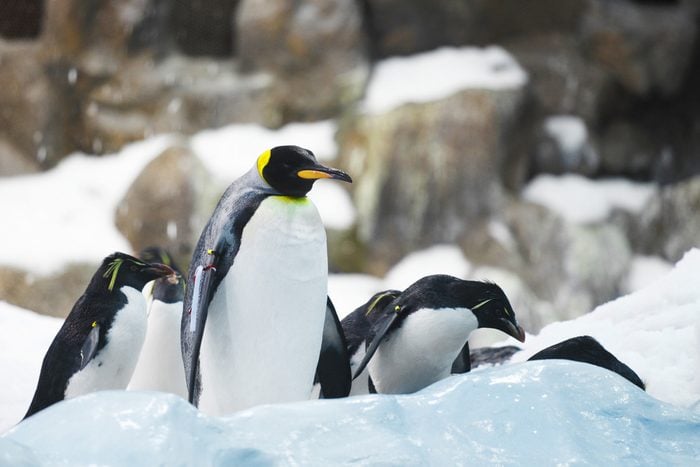
Emperor penguins
There'due south something so blithesome about the site of a bunch of penguins jumping into the air before plunging from the ocean onto the ice. Hither again, penguins are eminently practical. According to BBC's Blue Planet, just before they make this petty move "they release air bubbles from their feathers. This cuts the drag on their bodies, allowing them to double or triple their swimming speed apace and launch into the air."
49 / 60
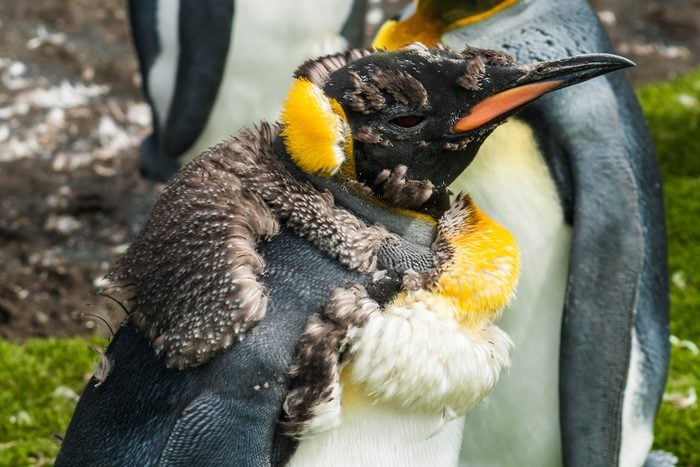
Even more than penguins
These (arguably) cutest of all possible animals take a less attractive side. Once a year they go through what'southward called a "catastrophic molt" and it's equally shocking as it sounds; they lose all of their feathers at once, which means no swimming or angling for dinner for the 2 weeks or longer it takes for new feathers to grow in. Don't miss these xv penguin facts that evidence they're absolutely ambrosial.
l / lx
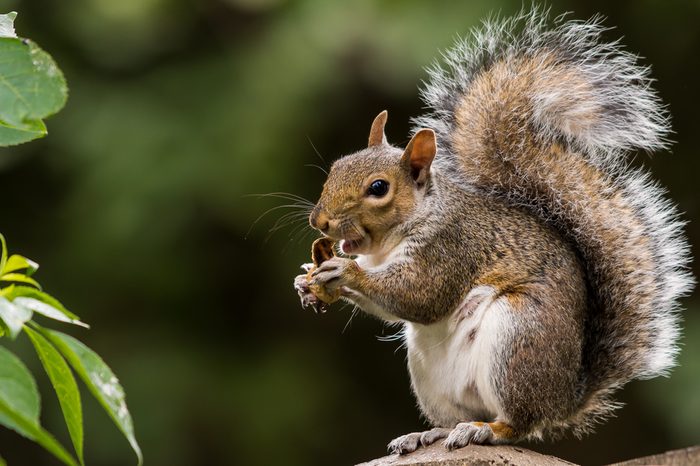
Squirrels
They ate all your tulip bulbs in the spring. In the autumn, they dug up all your planting beds to hide their stupid acorns. And all winter long they chased the poor hungry birds away from the bird feeder. Still, these backyard thugs are surprisingly good neighbors. Co-ordinate to scientists, they'll actually adopt orphaned baby squirrels as their ain.
51 / 60
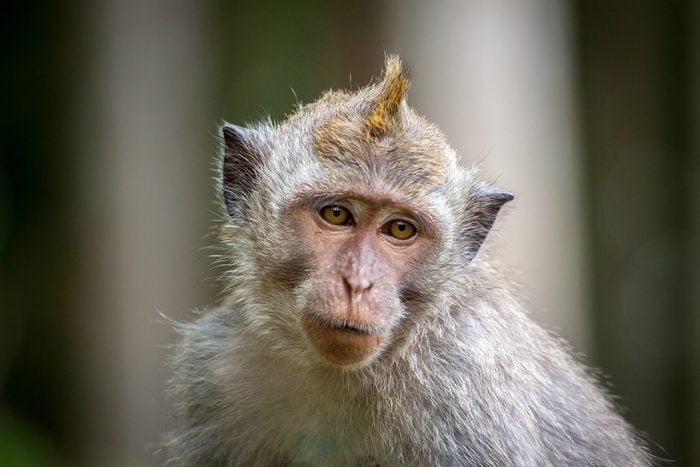
Macaques
The videos are all over YouTube: macaque monkeys in Nihon and elsewhere picking the pockets of tourists and taking their coins. What could possibly be inspiring these acts of larceny? Hunger. The clever macaques take their coins direct to vending machines and employ them to purchase themselves a little snack.
52 / 60
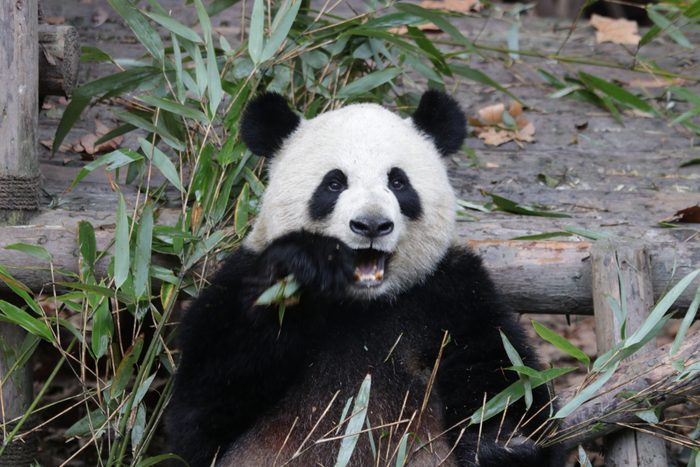
Giant pandas
Fact: Pandas are endangered. Fact: Pandas are Adorable. Fact: Pandas don't just eat bamboo, as most of united states of america accept been pb to believe (although bamboo does comprise a whopping 99 percentage of their diets). Actually, giant pandas are omnivores and when they tin get their paws on other comestibles, they besides enjoy noshing on modest animals and fish.
53 / 60
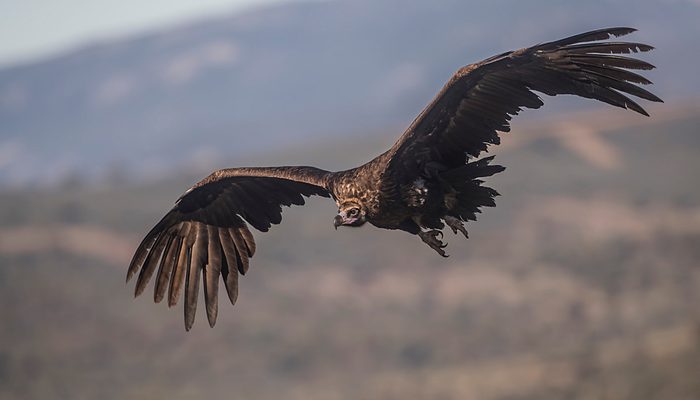
Vultures
Sure, they eat roadkill (actually doing usa a huge ecological favor). But that's not the to the lowest degree party-friendly behavior exhibited by vultures. Co-ordinate to Beast Planet, since these massive birds practise non have any sweat glands, they're forced to find another way to go along cool in the hot months. That mode: pooping on their ain feet.
54 / 60
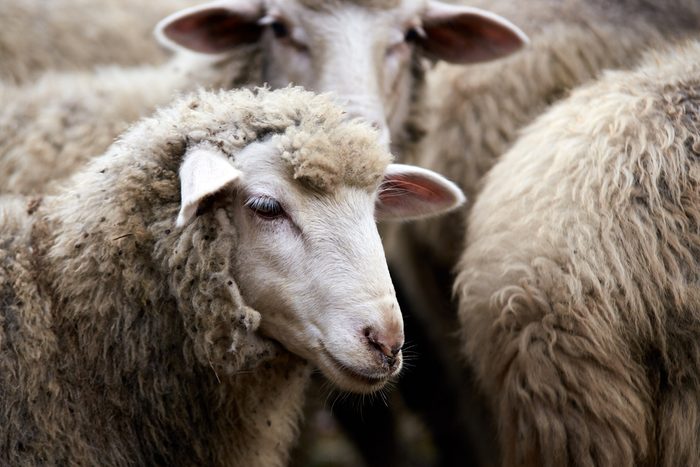
Sheep
According to an article in Modern Farmer mag, sheep have a lot more going for them than might be immediately apparent. To wit, they "have rectangular pupils that give them astonishing peripheral vision—it'southward estimated their field of vision is between 270 and 320 degrees; humans boilerplate about 155 degrees—and depth perception." Proficient luck sneaking up on these herbivores!
55 / 60
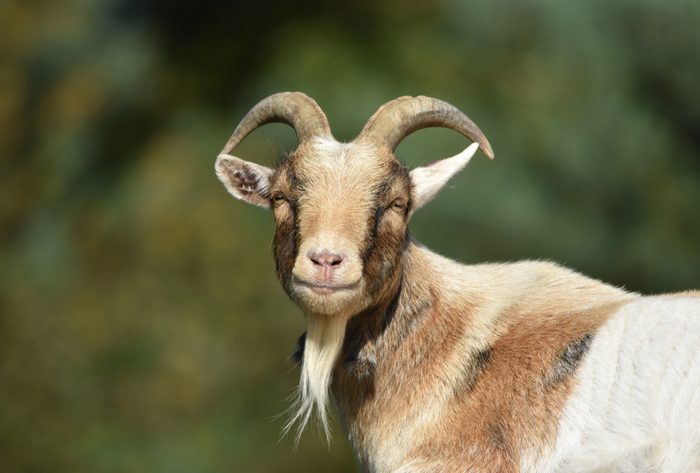
Goats
Not to exist outdone for unusualness in the farmyard, goats accept a few odd traits themselves. For starters, they have no teeth in their upper jaws. They've too got accents, which vary from country to canton. And every bit if all that wasn't peculiar plenty, reports Mental Floss, one species of caprine animal is known to accept its muscles freeze upwards when it startles, causing information technology to fall over in a faint-similar action.
56 / 60
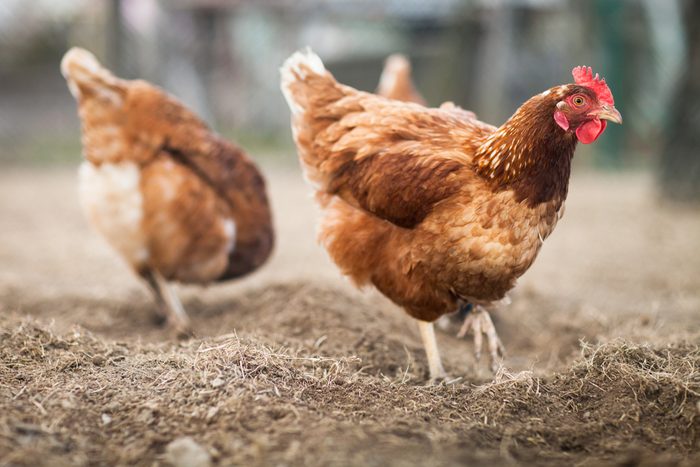
Chickens
Turns out, humans aren't the only animals that feel REM—the rapid centre movement of sleep during which we dream. Chickens have REM slumber, too, says ThePoultrySite.com. And more than that, they also experience something chosen unihemispheric wearisome-wave sleep, in which ane half of their encephalon stays awake while the other i rests.
57 / threescore
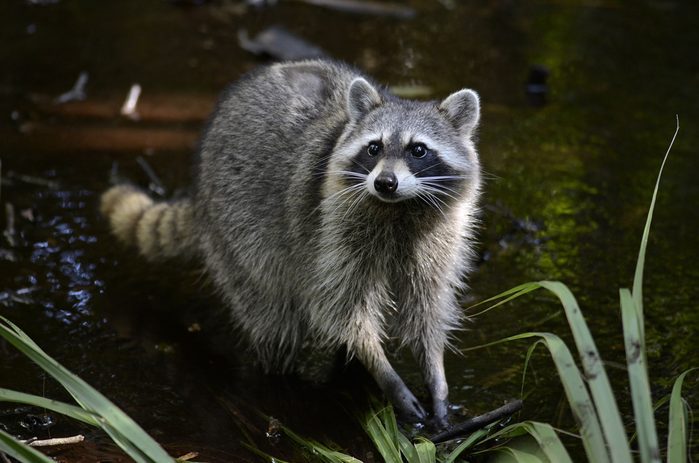
Raccoons
Sure it's annoying when the raccoons get into the trashcan and brand a meal—and a mess—out of your week-quondam garbage. But detect a lilliputian place of adoration in your heart for these masked scavengers—some of them accept been witnessed dunking their food in water in an action that looks suspiciously like they're giving it a preliminary wash.
58 / 60
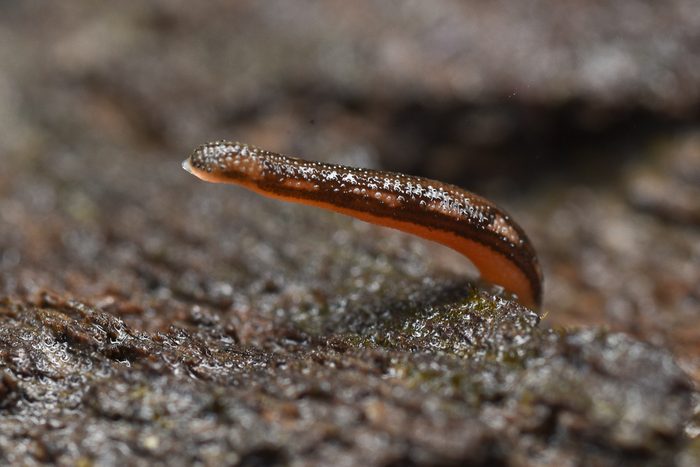
Leeches
Few folks since the stop of the Victorian era, when leeches were (misguidedly) used as a curative, have any fondness for these predatory worms. And it turns out, the distaste for them is well-founded. Co-ordinate to the American Museum of Natural History, leeches take "three split up jaws with 100 teeth each…[E]ach of the jaws and teeth makes a dissever incision"… all the improve to suck out your blood. Er, no thanks.
59 / 60
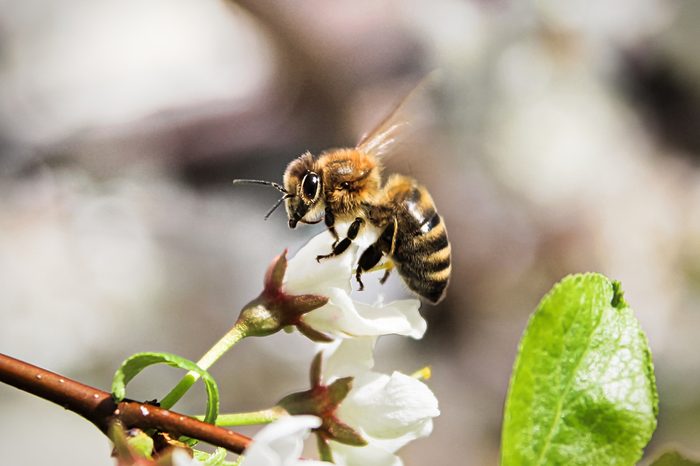
Honeybees
Honeybees living in a colony perform all sorts of tasks—cleaning and guarding the hive, feeding larvae, collecting pollen and flower nectar. In 2012, scientists at the University of Illinois reported their findings that bees have personalities that cause them to practice well at the jobs they're best suited to, with "thrill seekers," for example, excelling in scouting out new nest sites.
lx / 60
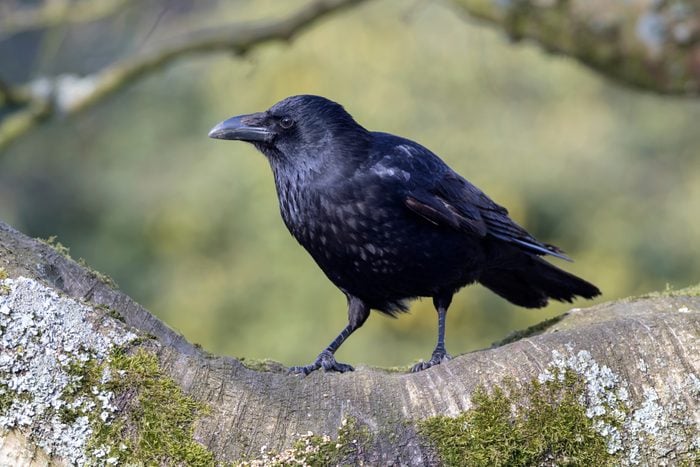
Crows
Faced with the seemingly impossible task of penetrating the hard shells of walnuts in social club to gobble to sweetmeats inside, crows in Japan have learned to lay the nuts out in the centre of the road so that cars can run them over and crack them open. Merely maybe about amazing of all, according to a PBS written report: the crows are reading traffic lights in order to know when it's prophylactic to adjust the nuts, and when it's safe to hop downwardly and gobble them up. Next, read on to discover out about 15 adorable animals yous didn't even know existed.
Originally Published: September xviii, 2019
Source: https://www.rd.com/list/animal-facts-most-interesting-creatures/
0 Response to "Things You Didnt Know About Animals"
Post a Comment